.png)
Basti Therapy
Classical Ayurvedic Enema Treatment
What is Basti Therapy?
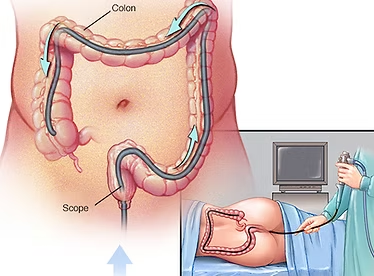
Long before the advent of intravenous fluids, the physicians of Ayurveda administered numerous herbal preparations directly into the anal canal to reach the deep tissues of the body and manage various acute and chronic disorders. This form of treatment is known as Basti in Ayurveda.
Though commonly translated as "Enema Therapy," Basti Therapy far exceeds the Western understanding of enemas. It utilizes a wide range of medicinal substances to treat very specific disorders.
The word Basti literally means "bladder." In ancient times, prior to the invention of catheters and syringes, physicians used cleaned and fashioned urinary bladders of animals to administer herbal preparations. Today, enema bags, pots with catheters, and syringes are used.
The concept of Basti also extends to the administration of herbal preparations through the vagina and urethra, which is specifically called Uttar Basti.
Basti & the Doshas
Basti Therapy is most commonly used for disorders of Vata Dosha. Through Basti, herbal preparations are absorbed through the large intestine and spread throughout the body into the deepest tissues, pulling aggravated Doshas back into the colon.
Since the large intestine is the main seat of Vata, Basti is especially effective for Vata disorders. However, it can also be employed in Pitta and Kapha disorders by modifying the herbal preparations.
For Kapha Dosha, for example, Bastis are administered with Kapha-reducing (scraping) substances and appropriately chosen Snehas.
Types of Basti Therapy
Basti Therapy is divided into two main categories:
- Niruha Basti (Decoction Enemas)
- Anuvasana Basti (Oil Enemas)
Niruha Basti (Decoction Enema)
In Niruha Basti, a strong herbal decoction is first prepared. To this, ingredients such as:
- Honey
- Saindhava (rock salt) and other suitable salts
- Herbal powders
- Different oils or animal fats
- Occasionally small amounts of black salt or specific herbs
are added according to the classical formula. Niruha Basti expels aggravated Vata and accumulated wastes from the body.
Anuvasana Basti (Oil Enema)
Anuvasana Basti primarily contains oil or ghee. While Niruha Basti emphasizes expulsion, Anuvasana Basti pacifies and nourishes Vata within the system, lubricating tissues and preventing excessive dryness.
Preparatory Measures
Before administering Basti Therapy, the body is prepared through:
- Snehana (oleation)
- Swedana (sudation)
These procedures strengthen tissues, widen internal channels, and encourage Doshas to move into the gastrointestinal tract. Often, external Snehana and Swedana are applied locally to the back, abdomen, and thighs depending on the disorder.
After Abhyanga and Swedana, the patient lies prone with the left leg extended and the right knee bent. A small amount of oil is applied to the anus, and then a well-lubricated catheter is gently inserted in the direction of the vertebral column. The Basti fluid is administered gradually with uniform pressure. Afterwards, the patient lies supine with hips elevated on a pillow until the urge to evacuate arises.
Administration Guidelines
- Niruha Basti is administered on an empty stomach, immediately after Abhyanga and Swedana. It is usually expelled quickly due to the potency of the preparation and is rarely retained beyond 45 minutes. The patient may eat immediately afterward, and should drink only hot water.
- Anuvasana Basti is given after a light meal. It is retained for a longer duration - often 3-4 hours, and sometimes overnight. The patient should not eat again until expulsion occurs and genuine hunger is felt.
For therapeutic purposes, Niruha and Anuvasana Bastis are often alternated in a planned sequence, sometimes for extended periods up to a month.
Indications
Niruha Basti is useful in:
- Abdominal disorders and distension
- Gout and various joint pains
- Splenic disorders and recurrent fevers
- Respiratory complaints
- Male and gynecological disorders
- Infertility and obstructed stools or urine
- Scrotal enlargement and urinary stones
- Amenorrhea and neurological disorders (tremors, paralysis, sensory dysfunctions)
Anuvasana Basti is indicated in conditions such as:
- Wasting, debility, and dryness
- Fatigue and convalescence
- Fractures and musculoskeletal weakness
- Anxiety and excessive thinking
- Support during pregnancy - especially in the ninth month, to facilitate easy and comfortable labor (under expert guidance).
Uttar Basti
As mentioned earlier, Uttar Basti refers to therapeutic enemas administered through the vaginal or urethral passages. Special medicated oils and Snehas are chosen depending on the specific disorder.
It is indicated in:
- Urinary problems such as dysuria, burning, delayed or obstructed urination
- Urinary stones
- Seminal disorders (e.g., poor motility, oligospermia)
- Reproductive and menstrual disorders
- Infertility and uterine health issues
Preparatory cleansing with Snehana and Swedana enhances the efficacy of Uttar Basti. Vaginal douching with specific herbal decoctions, known as Yoni Dhavana, is also performed prior to therapy.
The procedure is usually carried out immediately after menstruation, by inserting a catheter through the cervical passage. Following Uttar Basti, medicated tampons called Picchus are placed inside.